Lovelyhome Script Font for Handmade Creators
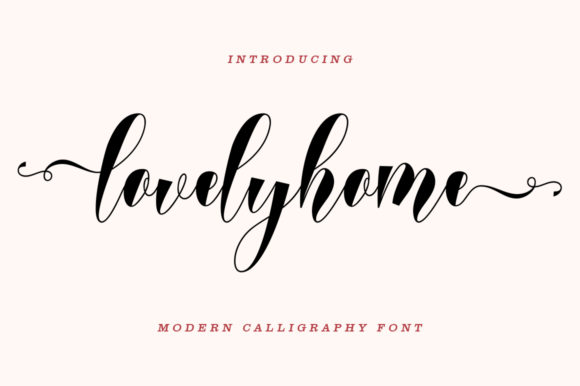
If you’ve ever spent hours tweaking letter spacing on a wedding invitation only to realize the script feels stiff—or worse, unreadable at small sizes—you know how much hinges on choosing the right font. Lovelyhome isn’t just another pretty script. It’s a thoughtfully crafted Script Amp font with graceful flow, subtle contrast, and a warmth that reads as both elegant and approachable. As someone who designs printable wall art, hand-poured candle labels, and boutique gift tags, I reached for Lovelyhome the moment I saw its natural rhythm—and haven’t looked back.
What makes Lovelyhome stand out in my workflow is how it balances expressiveness with practicality. Its strokes taper gently, its curves breathe without collapsing, and its baseline remains stable—no awkward wobbles when scaled down for ¾-inch sticker labels or laser-cut wooden tags. Unlike some ornate scripts that vanish into mush at 12pt, Lovelyhome stays legible even at 10pt on matte-finish product packaging. That reliability means fewer customer questions about “what does this say?” and more time spent refining your next batch of seasonal SVG designs.
I use Lovelyhome across physical and digital product lines—often in tandem. For example: our lavender honey jars feature a minimalist label with “Small Batch • Hand-Poured” in a clean sans serif, while the brand name “Hearth & Hive” sits above in Lovelyhome, slightly enlarged and centered. The contrast elevates the whole look without sacrificing clarity. On printable planner pages, I set weekly headers in Lovelyhome (at 18–24pt) and pair them with a soft, low-contrast sans like Montserrat Light for daily notes—creating visual hierarchy that feels intentional, not accidental.
Wedding stationery is where Lovelyhome truly shines. It’s become my go-to for welcome signs, ceremony programs, and foil-stamped thank-you cards—not because it’s flashy, but because it carries emotional weight. Guests don’t just read “Emma & James,” they *feel* the care behind it. And yes—it works beautifully in Cricut Design Space and Silhouette Studio. I’ve cut Lovelyhome from vinyl for acrylic cake toppers and heat-transfer vinyl for linen napkins, and every time, the curves hold up. Just avoid ultra-thin swashes for sub-½-inch cuts; stick to the standard characters or enabled alternates for crisp results.
For digital product creators, Lovelyhome adds instant polish to templates. I embed it in Canva-compatible printable bundles—think baby shower checklists, gratitude journals, or holiday recipe cards—and customers consistently comment on how “premium” the typography feels. That perception matters: a well-set script font signals craftsmanship, which justifies higher price points on Etsy and Shopify. When bundled with commercial licensing (which Lovelyhome includes), you’re free to use it in client logos, SVG files for crafters, editable Canva templates, and even printed-on-demand mugs or tote bags—no extra fees or attribution required.
Readability isn’t automatic with script fonts, but Lovelyhome handles real-world constraints gracefully. Its lowercase “a,” “e,” and “o” open wide enough to prevent ink bleed on kraft paper tags. The uppercase “Q” and “R” have clear terminals—no guessing whether that loop is a “Q” or a “G.” And while it’s designed for display use (titles, names, short quotes), I’ve successfully used it for three-line phrases on greeting cards (“You Are Loved • Today & Always”) by adjusting tracking just +20 and keeping line height generous. Longer body text? Stick to a supporting serif or sans—but Lovelyhome excels where attention needs to land.
Pairing Lovelyhome is intuitive. My most-used combo: Lovelyhome + Lora (a warm, readable serif) for vintage-inspired boutique packaging. For modern farmhouse signs, I layer it over Inter or Poppins Light—clean, neutral, and highly legible at distance. If you’re designing social media graphics or web banners, try Lovelyhome over a soft geometric sans like Nunito Sans. The contrast gives warmth without clutter. And because Lovelyhome includes stylistic alternates and optional swashes (check your .zip file for OTF features), you can soften a design with a delicate entry stroke on “Welcome,” or add quiet elegance to a monogram with a looping “L.”
File-wise, Lovelyhome delivers what crafters need: cross-platform OTF and TTF files, full Latin character support (including accented characters for bilingual shop names or French-inspired bakery tags), and no missing punctuation—critical when you’re typesetting “Mama’s Best Chocolate Chip Cookies, Est. 2019.” No hidden surprises. No missing glyphs mid-project. Just consistent, production-ready type.
One thing I always double-check before listing a new printable or template: licensing clarity. Lovelyhome comes with an extended commercial license—meaning you can use it in physical products you sell (stickers, t-shirts, mugs), digital downloads (PDF planners, SVG cut files), client work (logo design, branding kits), and even subscription-based design assets. No need to track usage caps or renew annually. That peace of mind lets me focus on color palettes, mockup photography, and thoughtful copy—not font compliance.
Whether you're pressing foil onto handmade soap wraps, cutting vinyl for a farmers’ market sign, or building a cohesive brand identity for your candle line, Lovelyhome supports your craft—not the other way around. It doesn’t shout. It invites. It feels human-made, even when scaled or digitized. And in a marketplace crowded with generic scripts, that authenticity is your quiet competitive edge.